
...
Cardiance Group · Switzerland

Cardiac catheter­isation
in Switzerland

Outpatient cardiac catheterisation in 30 to 90 minutes at two locations — Ergolz Klinik Liestal and Cardiance Clinic Pfäffikon SZ. First appointments available within 48 hours, same-day discharge in 95 % of cases.

Phone Liestal: +41 61 906 92 92 · Pfäffikon SZ: +41 52 303 47 47

Updated September 2026 · Medically reviewed by FMH-certified cardiologists, Cardiance Group · Sources: ESC Guidelines 2024, SGK, FOPH (BAG) KVG Art. 25

30–90

minutes procedure time

95 %

done as outpatients

< 1 / 1'000

serious complications

48 h

First appointments available within 48 h
Quick answer

At Cardiance Group, a cardiac catheterisation usually takes 30 to 90 minutes and is carried out as an outpatient procedure in over 95 % of cases. In a purely diagnostic examination, serious complications occur in fewer than 1 in 1’000 cases.

Source: Swiss Society of Cardiology (SGK). As of Q1 2026.

01 — Definition

What is cardiac catheterisation?

Cardiac catheterisation — a minimally invasive diagnostic method in which a thin plastic catheter (1–2 mm in diameter) is advanced through an artery in the wrist or groin up to the heart. Iodine-based contrast dye is injected through the catheter into the coronary arteries, so that narrowings, blockages or valve defects become visible on X-ray imaging (fluoroscopy).

The examination is also known as left heart catheterisation, coronary angiography or simply cardiac catheter — all of these terms refer to the same procedure. For decades it has been the gold standard for diagnosing coronary artery disease, and it is performed more than 50’000 times a year in Switzerland.

If a narrowing is found during the examination, it can be treated with a stent in the same session — this is known as percutaneous coronary intervention (PCI).

FMH
Medically reviewed

FMH-certified cardiologists · Cardiance Group · Last reviewed 2026-04

Schematic illustration of the heart showing the three areas covered by cardiac catheterisation: the coronary arteries on the surface of the heart, the pressures in the heart chambers and the function of the heart valves.THREE AREAS, ONE EXAMINATION1231 · Coronary arteriesImaged with contrast dye — where are the narrowings?2 · Heart chambersPressure check — how well does it pump?3 · Heart valvesFunction — leaking or narrowed?Schematic illustration, not anatomically to scale.

This information is in line with the recommendations of the Swiss Society of Cardiology (SGK) and the European Society of Cardiology (ESC).

02 — Indications

When is cardiac catheterisation advisable?

In Switzerland, cardiac catheterisation is recommended whenever significant coronary artery disease or structural heart disease is likely and the diagnosis cannot be sufficiently clarified using non-invasive methods.

01

Suspected coronary artery disease

Chest pain on exertion (angina pectoris), shortness of breath or a drop in exercise capacity — abnormal exercise ECG or stress echo.

02

Acute heart attack

Emergency indication: cardiac catheterisation within 90 minutes of admission to reopen the blocked vessel (primary PCI).

03

Unexplained heart failure

Newly diagnosed heart failure with reduced pumping function — to investigate an ischaemic cause.

04

Heart valve disease

Before TAVI, mitral valve surgery or MitraClip — pressure measurements and assessment of the coronary arteries.

05

Complex arrhythmias

Before ablation of complex arrhythmias — to rule out underlying coronary artery disease as the cause.

06

Abnormal non-invasive tests

Markedly abnormal stress echo, cardiac MRI or CT coronary angiography showing significant stenoses.

07

High-risk patients before surgery

Before major non-cardiac surgery in patients with a cardiac risk profile — pre-operative assessment.

03 — Procedure

What happens during cardiac catheterisation?

From arriving at the clinic to being discharged, you should allow 4 to 6 hours. The procedure itself takes 30 to 90 minutes.

1

Admission & preparation

30 min

Registration at reception, blood pressure measurement, ECG and insertion of an IV line in your arm. The consent discussion usually takes place beforehand with your referring doctor. You change into a patient gown and are taken to the cath lab on a trolley.

2

Local anaesthetic & puncture

approx. 15 min (incl. draping etc.)

Sterile draping and local anaesthetic at the wrist (radial, standard approach) or, less often, at the groin (femoral). A thin needle is inserted into the artery — this is almost painless. A guidewire and a sheath are then placed.

3

Advancing the catheter

approx. 5 min

Under X-ray guidance, the catheter is gently guided through the artery to the heart. You will not feel this, as the inside of blood vessels has no pain receptors.

4

Contrast dye & imaging

approx. 15 min

Iodine-based contrast dye is injected through the catheter directly into the coronary arteries. This produces high-resolution X-ray images that show any narrowings or blockages. You may feel a brief sensation of warmth.

5

Optional: stent implantation

+ 30 min

If a significant narrowing is found, it can be widened with a balloon and held open with a stent in the same session (PCI). You will be informed about this before and during the procedure.

6

Pressure dressing & aftercare monitoring

3–5 h

A pressure dressing is applied (radial: 2–3 h). With femoral access, a closure device is usually used; a pressure dressing is applied less often. Bed rest after femoral access: 2–4 h. You rest in our monitoring area, are offered a snack or lunch and are closely monitored. If your readings are stable, you can go home the same day with someone accompanying you.

04 — Before and after the examination

Preparation and aftercare

On the day of the examination

During the first 24 / 48 / 72 hours

05 — Risks

Risks & side effects — clear figures

Diagnostic cardiac catheterisation is one of the safest invasive procedures in modern medicine. Serious complications occur in fewer than 1 in 1’000 cases. (Source: Swiss Society of Cardiology SGK, registry data 2025)

Common (up to 5 %)

Rare to very rare (< 1 / 1'000)

Data from the Swiss Society of Cardiology (SGK) and the European Society of Cardiology (ESC), averaged across certified Swiss cardiac catheterisation centres, as of 2025.

06 — Costs

How much does cardiac catheterisation cost in Switzerland?

Cost coverage by basic health insurance

In Switzerland, cardiac catheterisation is a mandatory benefit of compulsory health insurance (OKP) under the Federal Health Insurance Act (KVG) — provided there is a medical indication. You only pay your deductible and co-payment.

Service Insurance class Typical costs (CHF)
Cardiac catheterisation without stent (diagnostic, outpatient)
General (basic insurance, KVG)
2’000 – 4’000
Cardiac catheterisation with stent (PCI, outpatient)
General (basic insurance, KVG)
4’000 – 9’000

Important: If there is a medical indication, basic health insurance covers the costs. You only pay your deductible (up to CHF 2’500) and the co-payment (10 %, max. CHF 700/year for adults). The TARDOC tariff codes for a diagnostic cardiac catheterisation are C05.11A + C05.11B. If you have any questions, our patient administration team will confirm cost coverage with your health insurer in advance.

07 — Outpatient or inpatient?

Same-day discharge at Cardiance Group

We perform over 95 % of diagnostic cardiac catheterisations on an outpatient basis. You arrive in the morning and leave in the afternoon — no overnight stay in hospital.

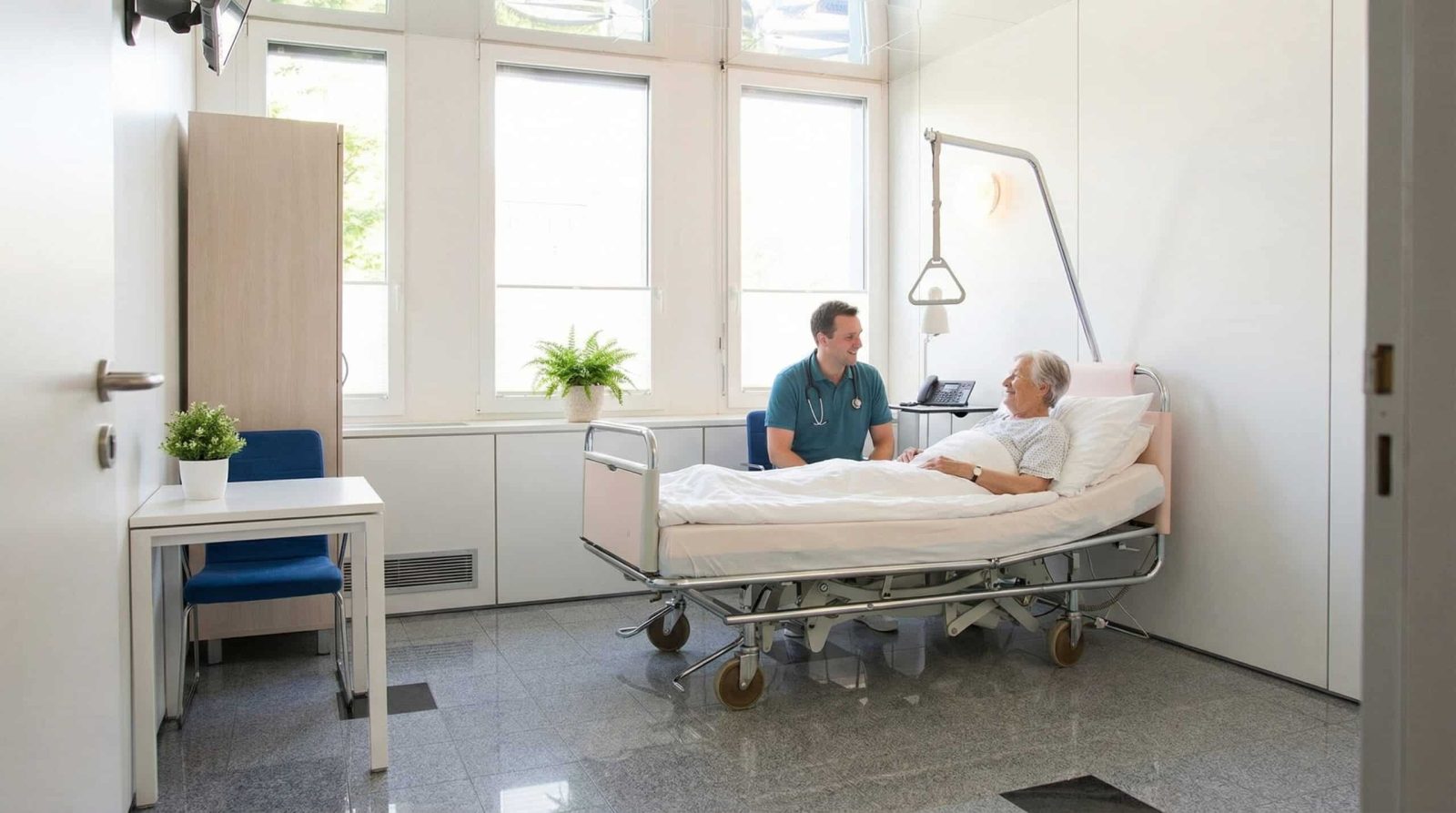
Patient room at Cardiance Clinic – personal care during outpatient cardiac catheterisation

Cardiance — outpatient

Hospital — inpatient

08 — Our locations

Cardiac catheterisation at 2 Cardiance locations

Ergolz Klinik Liestal – Cardiance Group location for cardiac catheterisation

Ergolz Klinik Liestal

Northwestern Switzerland · Basel region · Basel-Landschaft

Address

Hammerstrasse 35, 4410 Liestal

Getting there

8 min from Liestal station · parking available

Consultation hours

Mon–Fri 08:00–18:00

Catchment area

Liestal · Sissach · Pratteln · Basel-Stadt · Upper Baselbiet

Cardiance Clinic Pfäffikon SZ – Cardiance Group location for cardiac catheterisation

Cardiance Clinic Pfäffikon SZ

Central Switzerland · Lake Zurich · Canton of Schwyz (NOT Pfäffikon ZH)

Address

Zentrum Staldenbach 5/7, 8808 Pfäffikon SZ

Getting there

5 min from Pfäffikon SZ station · underground car park

Consultation hours

Mon–Fri 08:00–17:00

Catchment area

Höfe · Ausserschwyz · Lake Zurich · March · Glarus · Linth region

09 — Cardiance at a glance

Switzerland's first outpatient heart clinic

95 %

Same-day discharge — patients go home the same day

100 %

In the CSS insurance quality report, Cardiance Clinic scored 100 % and received the quality rating “EXCELLENCE” (Pfäffikon location)

2500 +

procedures per year — high volume as a safety standard

48 h

First appointments available within 48 h

In the CSS insurance quality report, Cardiance Clinic scored 100% and received the quality rating “EXCELLENCE”. This rating stands for outstanding medical quality and patient satisfaction.

10 — After the results

What happens after the results?

Three treatment pathways — depending on the findings. The decision is made together with you by the Heart Team.

Normal findings

No significant narrowings. Conservative management.

Mild / moderate CAD

OMT — optimal medical therapy.

Significant stenosis

Stent, or bypass surgery as recommended by the Heart Team.

11 — Special cases

Special cases & high-risk patients

Pre-existing conditions require special preparation — we discuss everything openly with you in advance.

Insulin therapy is adjusted individually with your GP. Blood sugar is checked before and after the procedure. Bring your own medication.

If eGFR < 60 ml/min: hydration with 0.9 % saline (NaCl) before and after the procedure, a smaller amount of contrast dye, and a follow-up creatinine check after 48 h. If eGFR < 30 ml/min: Heart Team consultation.

Premedication with steroids and antihistamines immediately before the procedure.

Only if there is an urgent indication. Radiation protection with a lead apron over the abdomen, minimal fluoroscopy time. Multidisciplinary decision together with obstetrics and neonatology.

Age is not an exclusion criterion. No higher risk of complications if your general condition is stable.

Stop taking them as agreed with your doctor. Exception: emergency PCI for an acute heart attack — no interruption.

12 — Back to everyday life

When can I do what again?

After radial access. With femoral access, these times may be longer.

Activity

Possible again after

Driving (yourself)

24 hours

Work (desk-based)

1–2 days

Light exercise (walking, yoga)

Day 3–7

Sexual activity

3–7 days

Air travel

From day 3

Sauna / hot bath

From day 7

Heavy lifting (> 5 kg)

1–2 weeks

Competitive sport

2–4 weeks

13 — Our team

FMH cardiologists with extensive cath lab experience

Personal care from the initial assessment through to aftercare — the same contacts throughout, no changing shifts.

Prof. Dr. med. Ahmed A. Khattab, Medical Director and FMH cardiologist, Cardiance Group
Medical Director

Prof. Dr. med. Ahmed A. Khattab

FMH Cardiology · Invasive Cardiology · Interventional Cardiology

Prof. Dr. med. et phil. nat. Rolf Vogel, Senior Consultant in Cardiology, Ergolz Klinik Liestal
Head of Cardiology (Liestal)

Prof. Dr. med. et phil. nat. Rolf Vogel

FMH Cardiology · Interventional Cardiology · dipl. Ing. ETH

Prof. Dr. med. Dai-Do Do, FMH angiologist, Cardiance Clinic Pfäffikon SZ
Angiology (Pfäffikon)

Prof. Dr. med. Dai-Do Do

FMH Angiology · Interventional Angiology · Duplex ultrasound

Prof. Dr. med. Karl-Heinz Kuck, FMH cardiologist, electrophysiology, Cardiance Group
Electrophysiology

Prof. Dr. med. Karl-Heinz Kuck

FMH Cardiology · Electrophysiology · Cardiac arrhythmias

Full medical team at cardiance.com/arzte

14 — Glossary

Key terms explained

The most important medical terms — short and jargon-free.

CAD

Coronary artery disease — narrowing of the coronary arteries caused by plaque deposits.

Stenosis

Narrowing of a blood vessel; considered significant from a 50–70 % reduction in the vessel diameter.

Stent

A tiny metal mesh tube that keeps a narrowed section permanently open.

PCI / PTCA

Percutaneous coronary intervention or balloon angioplasty — the treatment part of cardiac catheterisation.

Radial / Femoral

Access via the wrist (radial, standard) or the groin (femoral, exception).

Heart Team

Interdisciplinary conference (cardiology + cardiac surgery) to decide on treatment.

OMT

Optimal medical therapy — standard treatment for non-significant CAD.

Same-day discharge

Going home on the day of the procedure — Cardiance standard for stable patients.

15 — FAQ

Frequently asked questions

Answers curated by our FMH cardiologists. Can’t find your question? Simply give us a call.

The procedure itself usually takes 30 to 90 minutes; a purely diagnostic examination without a stent is at the lower end of this range. Including preparation and post-procedure monitoring, you should allow 4 to 6 hours at the clinic.

The examination is carried out under local anaesthetic and in the vast majority of cases is painless. You will only feel a brief prick when the local anaesthetic is given at the wrist or groin. While the contrast dye is being injected, you may notice a brief sensation of warmth — this is not pain.

A diagnostic cardiac catheterisation in Switzerland typically costs between CHF 2’000 and CHF 9’000, depending on insurance class, location and whether an interventional procedure (e.g. a stent) is added. Under compulsory basic health insurance (KVG), the examination is a mandatory benefit when medically indicated — you only pay your deductible and co-payment.

Yes. When medically indicated, cardiac catheterisation in Switzerland is a mandatory benefit of compulsory basic health insurance (OKP/KVG). You only pay your annual deductible and the 10 % co-payment, up to a maximum of CHF 700 per year.

In a purely diagnostic cardiac catheterisation, serious complications occur in fewer than 1 in 1’000 cases (source: SGK). The most common, harmless risks are bruising at the puncture site, temporary heart rhythm disturbances or reactions to the contrast dye. Serious complications such as stroke or heart attack are extremely rare.

Yes. At Cardiance Group, more than 95 % of diagnostic cardiac catheterisations are performed on an outpatient basis. You arrive at the clinic in the morning and, after 4 to 6 hours of observation, can go home the same day. Requirements: a stable circulation and someone to accompany you home.

For the first 48 hours (including the day of the procedure): no sport or physical exertion. For the first 48 hours: no sauna, no hot baths, no alcohol. Drink at least 1.5 litres of water to flush out the contrast dye. After radial access, wear the pressure dressing as instructed by the nursing team.

You do not need to fast — on the morning of the examination you can usually have a light breakfast and drink plenty of fluids. Take your medication as usual, except blood thinners (aspirin may be taken as usual). Bring your insurance card, medication list and previous test results. Preparation at the clinic takes about 30 minutes.

Radial access via the wrist has been the standard approach at Cardiance Group for more than 10 years. It is more comfortable for patients, has a considerably lower rate of bleeding complications and allows you to get up immediately after the procedure. Femoral access via the groin is only chosen in exceptional cases.

When there is a medical indication and the costs are billed to basic health insurance, a referral from your GP or a cardiologist in private practice is usual, but not every insurance model strictly requires one. Self-paying and private patients can register with us directly.

First appointments available within 48 h

Talk to our team — first appointments available within 48 hours

Whether you would like an initial assessment, a second opinion or a planned procedure: our patient administration team will get back to you within one working day (Monday to Friday). Self-paying and private patients without a referral are welcome.

Mon–Fri · 08:00–18:00 (Pfäffikon SZ until 17:00)

Emergencies outside opening hours: 144 (ambulance)

Seraphinite AcceleratorOptimized by Seraphinite Accelerator
Turns on site high speed to be attractive for people and search engines.